
$10.00
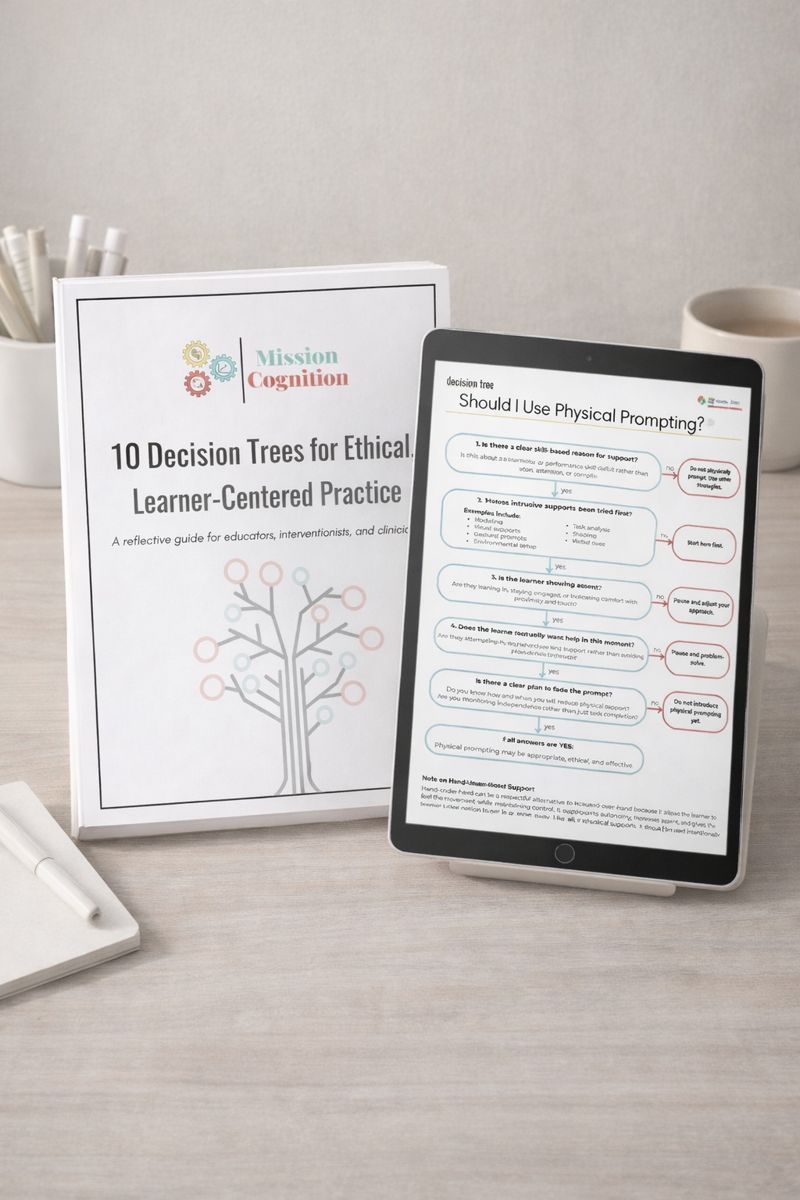
10 Decision Trees for Ethical, Learner-Centered Practice
These decision trees were created to support thoughtful, intentional use of common behavior-analytic and educational tools. Many widely used strategies (e.g., prompting, reinforcement systems, extinction procedures, structured teaching formats) are not inherently “good” or “bad”. Their impact depends on how, why, and when they are used. The specific interventions or strategies included herein, are not done so because they are recommended, but rather because they are common and may be controversial.
A reflective guide for educators, interventionists, and clinicians
Rather than offering prescriptive rules, these decision trees encourage professional judgment, ethical reflection, and individualized decision-making. They are especially useful for:
Each tree invites you to consider critical questions before implementing an intervention:
Is this truly necessary?
Is this supporting growth or enforcing compliance?
Does this preserve dignity and autonomy?
Am I building skills, not just suppressing behavior?
This resource is designed to help practitioners pause, reflect, and make informed decisions that prioritize:
Rather than offering prescriptive rules, these decision trees encourage professional judgment, ethical reflection, and individualized decision-making. They are especially useful for:
Each tree invites you to consider critical questions before implementing an intervention:
Is this truly necessary?
Is this supporting growth or enforcing compliance?
Does this preserve dignity and autonomy?
Am I building skills, not just suppressing behavior?
10 Decision Trees for Ethical, Learner-Centered Practice
These decision trees were created to support thoughtful, intentional use of common behavior-analytic and educational tools. Many widely used strategies (e.g., prompting, reinforcement systems, extinction procedures, structured teaching formats) are not inherently “good” or “bad”. Their impact depends on how, why, and when they are used. The specific interventions or strategies included herein, are not done so because they are recommended, but rather because they are common and may be controversial.
A reflective guide for educators, interventionists, and clinicians
Rather than offering prescriptive rules, these decision trees encourage professional judgment, ethical reflection, and individualized decision-making. They are especially useful for:
Each tree invites you to consider critical questions before implementing an intervention:
Is this truly necessary?
Is this supporting growth or enforcing compliance?
Does this preserve dignity and autonomy?
Am I building skills, not just suppressing behavior?
This resource is designed to help practitioners pause, reflect, and make informed decisions that prioritize:
Rather than offering prescriptive rules, these decision trees encourage professional judgment, ethical reflection, and individualized decision-making. They are especially useful for:
Each tree invites you to consider critical questions before implementing an intervention:
Is this truly necessary?
Is this supporting growth or enforcing compliance?
Does this preserve dignity and autonomy?
Am I building skills, not just suppressing behavior?
There are no reviews yet.




Reviews
There are no reviews yet.